
Free Name Tracing Worksheets Printable for Preschoolers
These free name tracing worksheets printable for preschoolers take little ones from simple straight lines all the way to confident letter and name formation. Each level builds fine motor strength and pencil control step by step, making handwriting practice fun instead of frustrating.
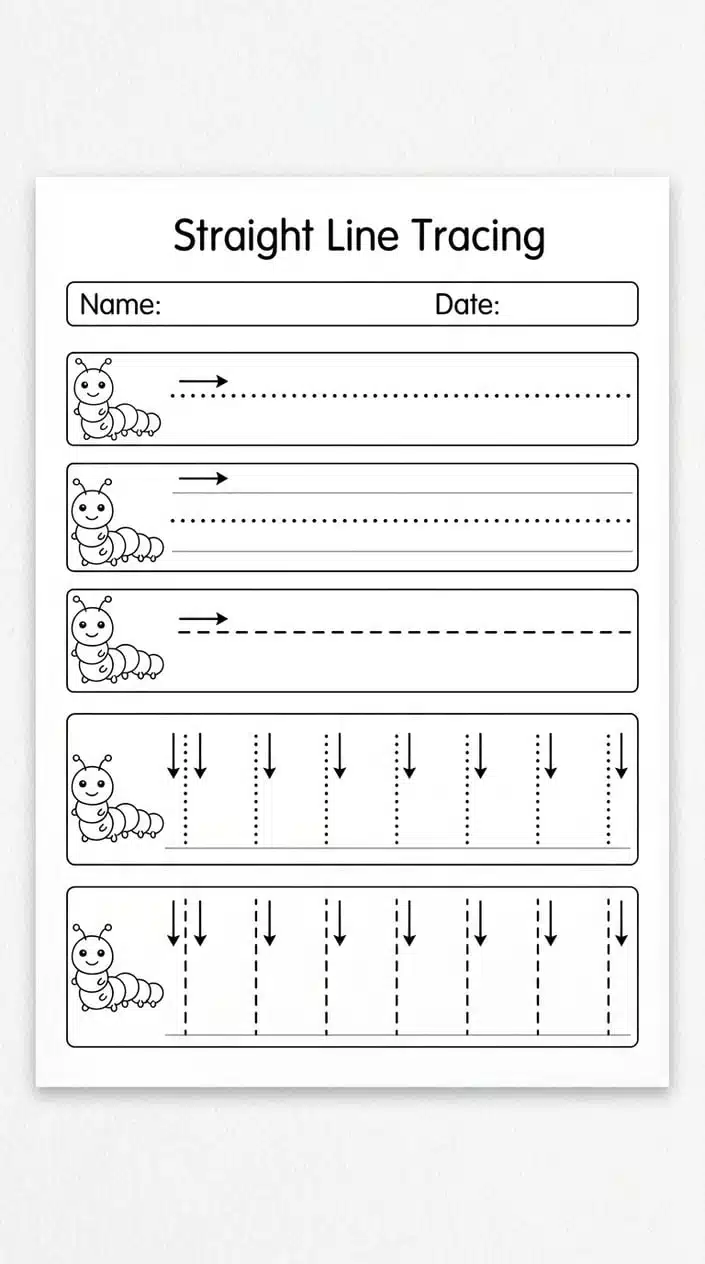
Straight Line Tracing for First Time Pencil Grip
Horizontal and vertical straight lines build the very first pencil control skills. Encourage a tripod grip and slow, steady strokes from top to bottom or left to right.
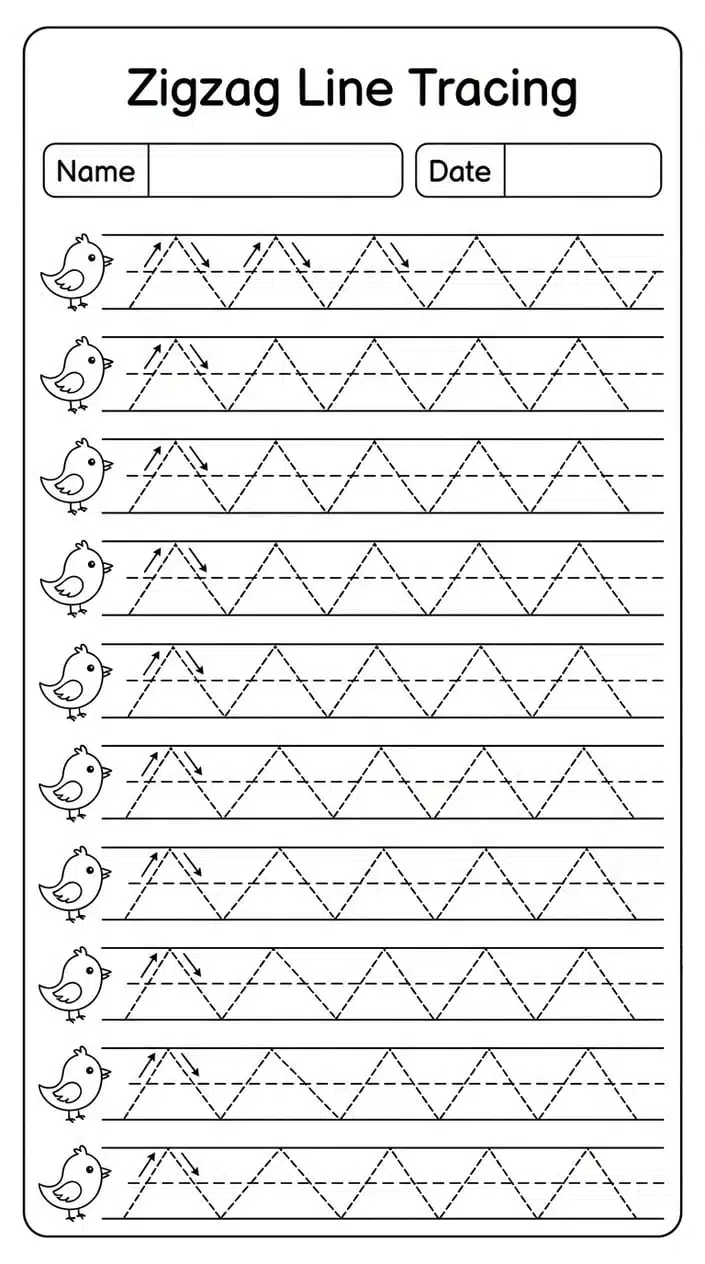
Zigzag Line Tracing to Build Wrist Control
Zigzag patterns teach children to change direction smoothly, strengthening wrist flexibility. Remind kids to keep their pencil moving without lifting it off the paper.
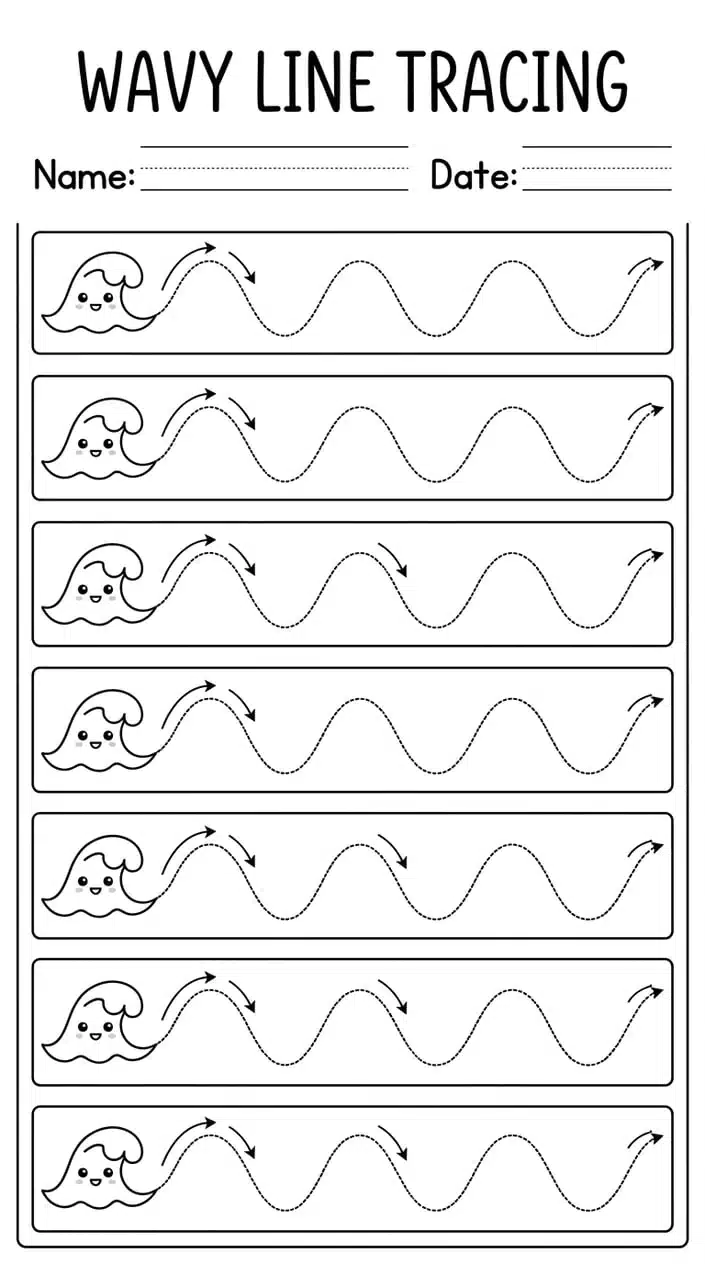
Wavy Line Tracing for Smooth Hand Movement
Wavy lines introduce gentle curves that prepare fingers for letter shapes. Hold the pencil lightly and glide slowly to keep the line smooth and even.
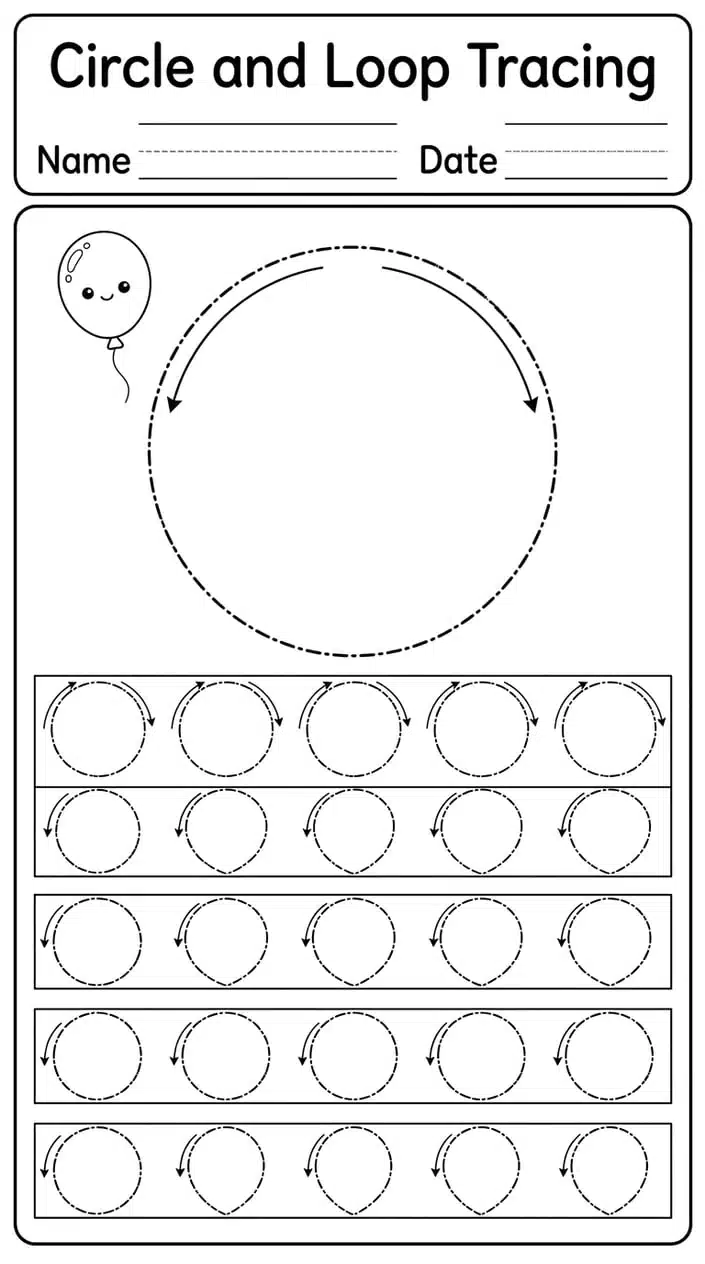
Circle and Loop Tracing for Rounded Letter Shapes
Circles and loops build the rounded strokes needed for letters like a, o, and g. Practice tracing from the top down in one continuous circular motion.
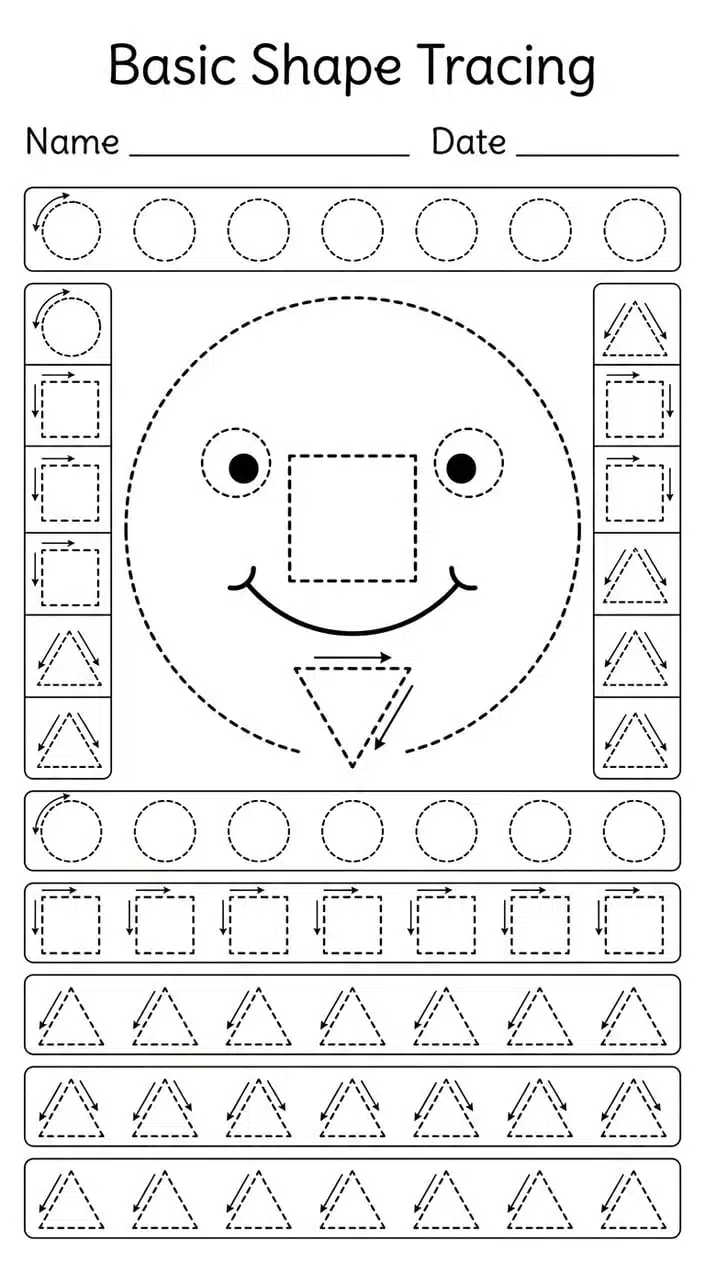
Basic Shape Tracing with Circles Squares and Triangles
Tracing circles, squares, and triangles develops shape recognition alongside pencil control. Guide little hands to follow the dotted outline slowly and steadily.
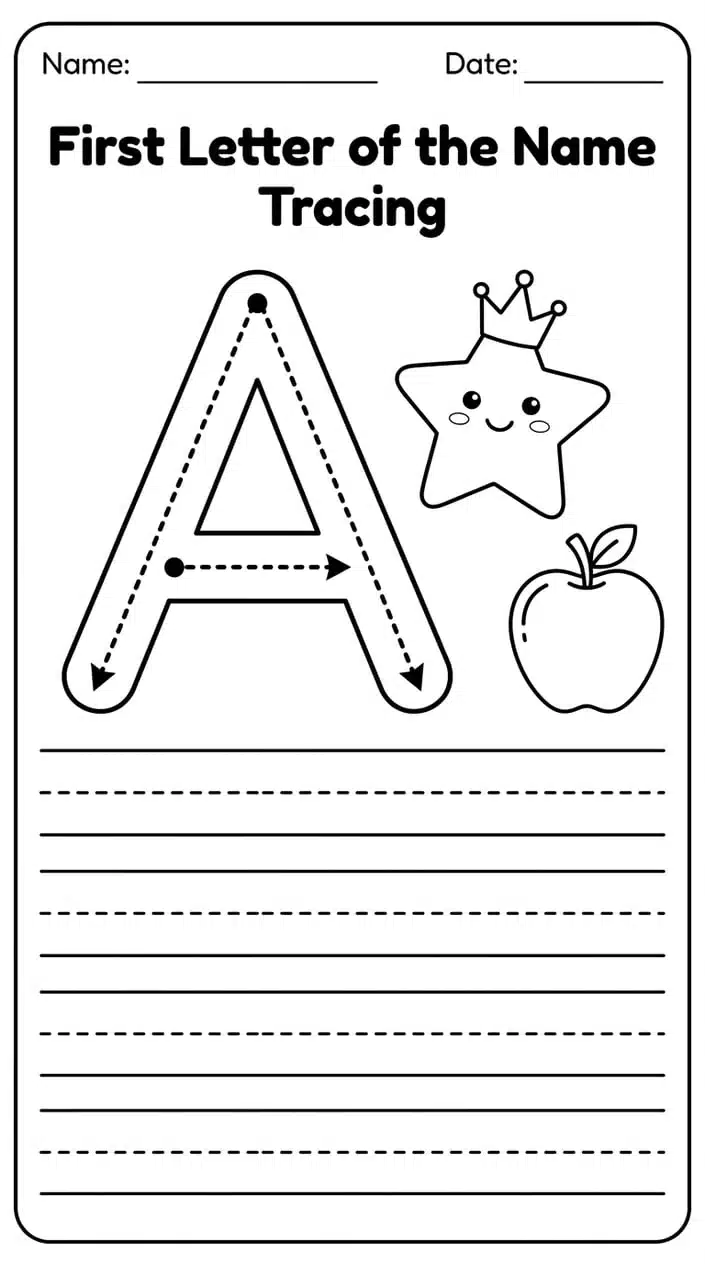
First Letter of the Name Tracing Practice
Kids trace the first big letter of their name to feel proud and motivated early on. Pair this with our letter A tracing worksheets for extra practice.
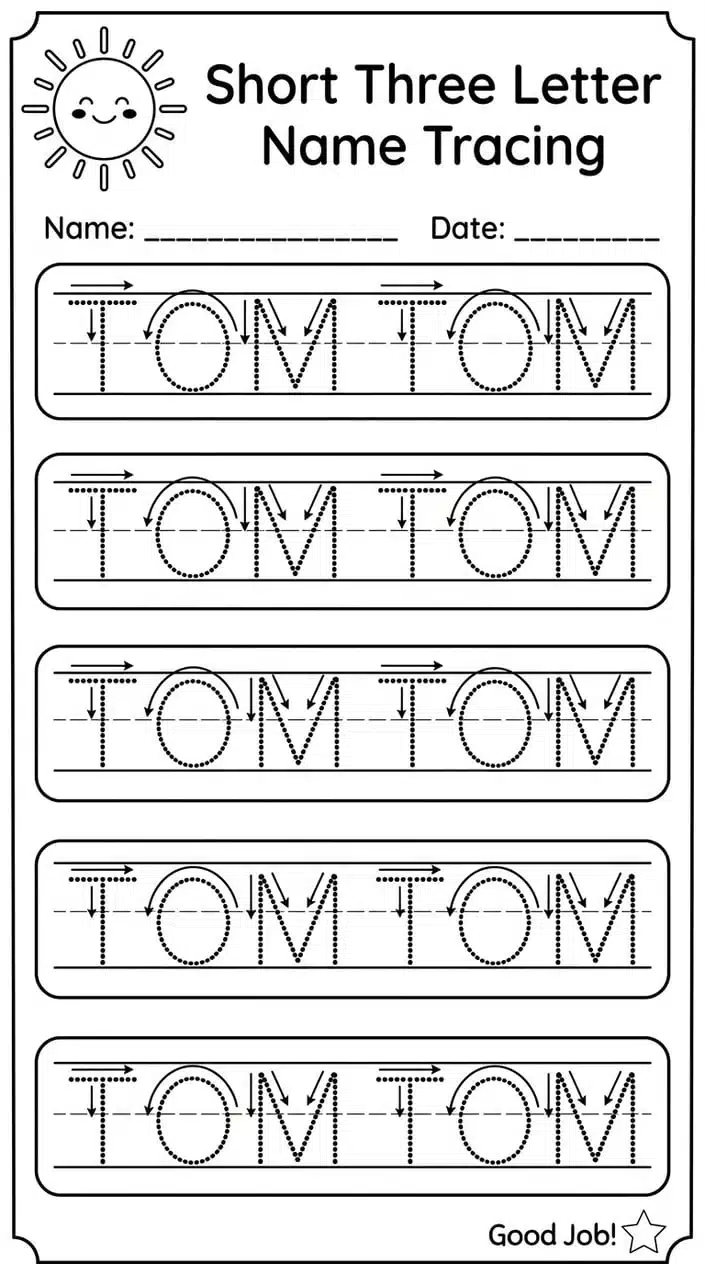
Short Three Letter Name Tracing Rows
Short names give beginners an easy win before tackling longer words. This step builds on skills from our letter tracing worksheets.
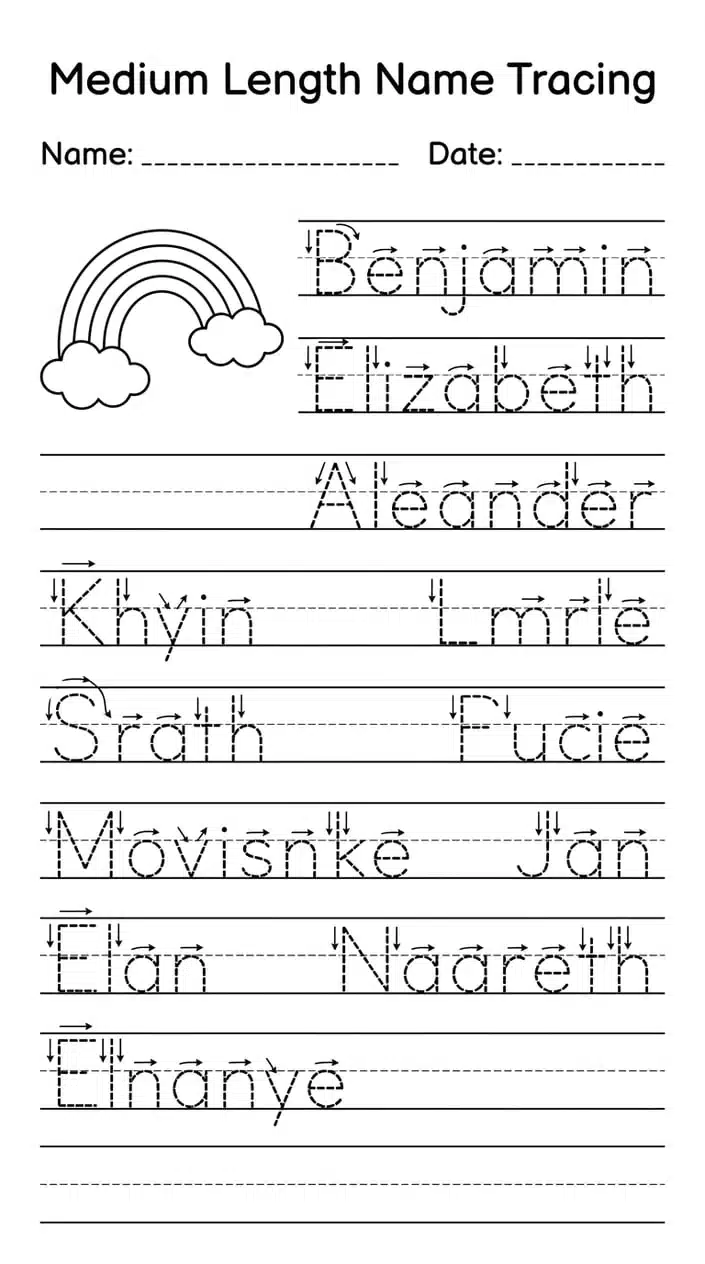
Medium Length Name Tracing with Uppercase Start
Medium names combine an uppercase first letter with lowercase letters, teaching capitalization rules. Check our uppercase and lowercase letter C worksheets for more support.
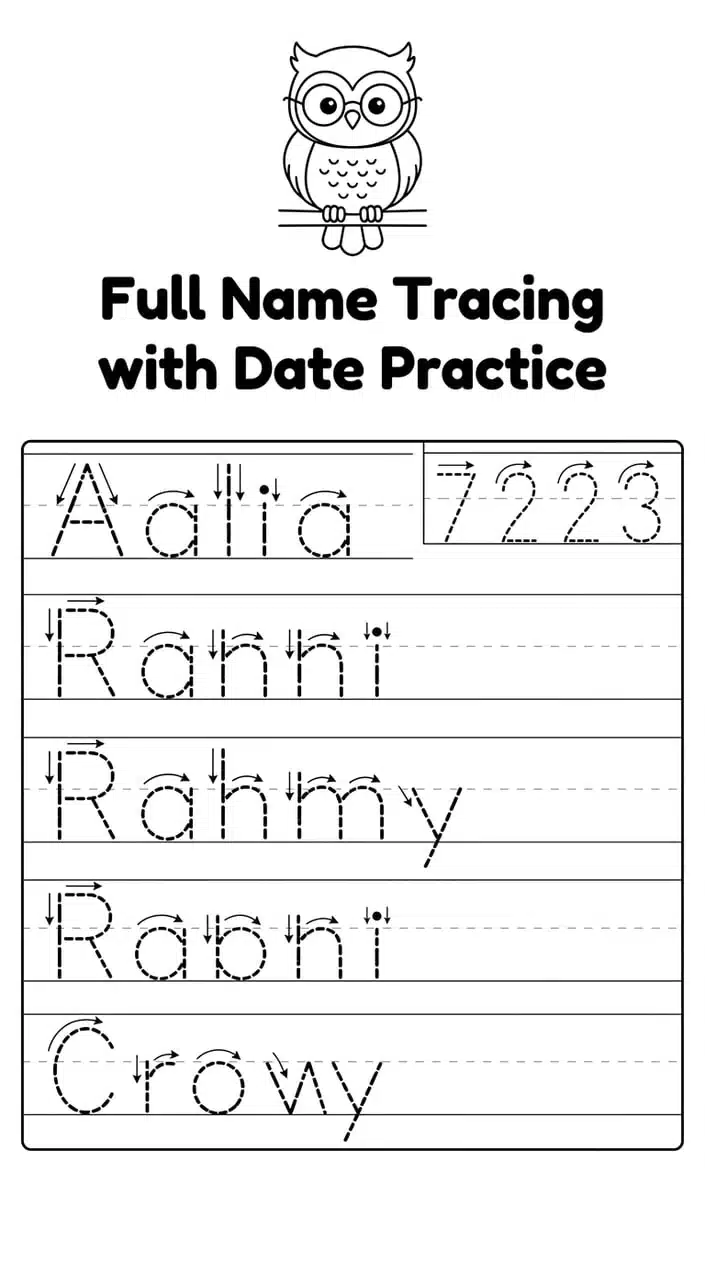
Full Name Tracing with Number Date Practice
Full name tracing paired with a date line prepares kids for real classroom writing tasks, similar to our number tracing worksheets 1-10.
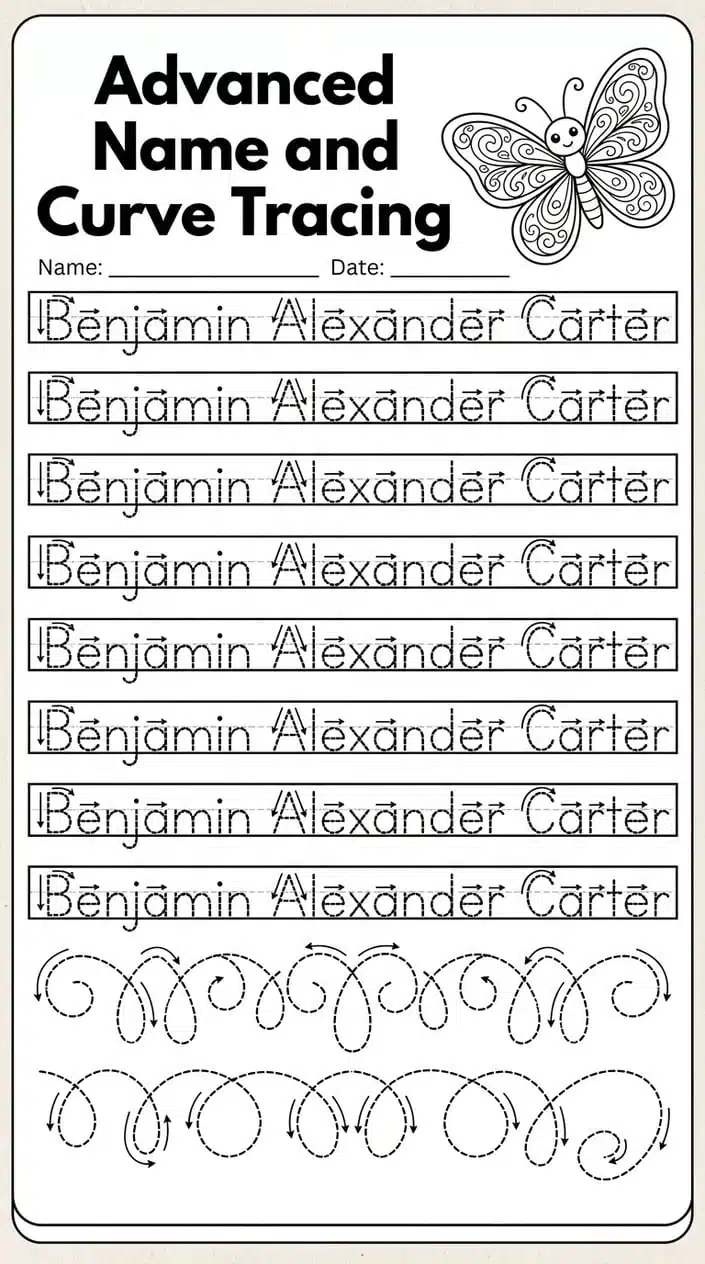
Advanced Name and Curve Combination Tracing
Combining full name tracing with decorative curves and loops challenges kids to write independently. Celebrate progress with a coloring break using our free printable coloring pages.
From simple straight lines to full name writing, these free name tracing worksheets printable for preschoolers guide little learners at their own pace with plenty of encouragement along the way. Print the set today and watch your child’s confidence and handwriting grow one page at a time.
Frequently Asked Questions
What age is best for name tracing worksheets printable for preschoolers?
Most children are ready between ages 3 and 5, once they can hold a pencil with a basic grip. Free name tracing worksheets printable for preschoolers work well because they start with simple lines before moving to letters.
How do I teach my child to trace their name correctly?
Start with straight and curved line practice before introducing actual letters from their name. Guide their hand gently, use verbal cues like top to bottom, and keep sessions short and positive.
Why is name tracing important for preschoolers?
Name tracing builds fine motor control, letter recognition, and early writing confidence all at once. It also helps children recognize their own name in print, which supports early literacy skills.
How often should preschoolers practice tracing worksheets?
Short 10 to 15 minute sessions two to three times a week are ideal for building skills without causing frustration. Consistency matters more than long practice sessions for young children.
What if my child struggles with curved letters in their name?
Go back to basic circle and loop tracing exercises before returning to letters, since curves require more wrist control than straight lines. Practicing shapes like those in our counting tracing worksheets can also help build the same motor skills.