Free Shapes Worksheets for Preschoolers
Free shapes worksheets for preschoolers are one of the best tools for building early math and visual recognition skills in young learners. These activity sheets help children identify, trace, match, and name basic shapes like circles, squares, triangles, and more. Whether you are a preschool teacher, homeschool parent, or caregiver, these worksheets make shape learning hands-on, engaging, and developmentally appropriate.
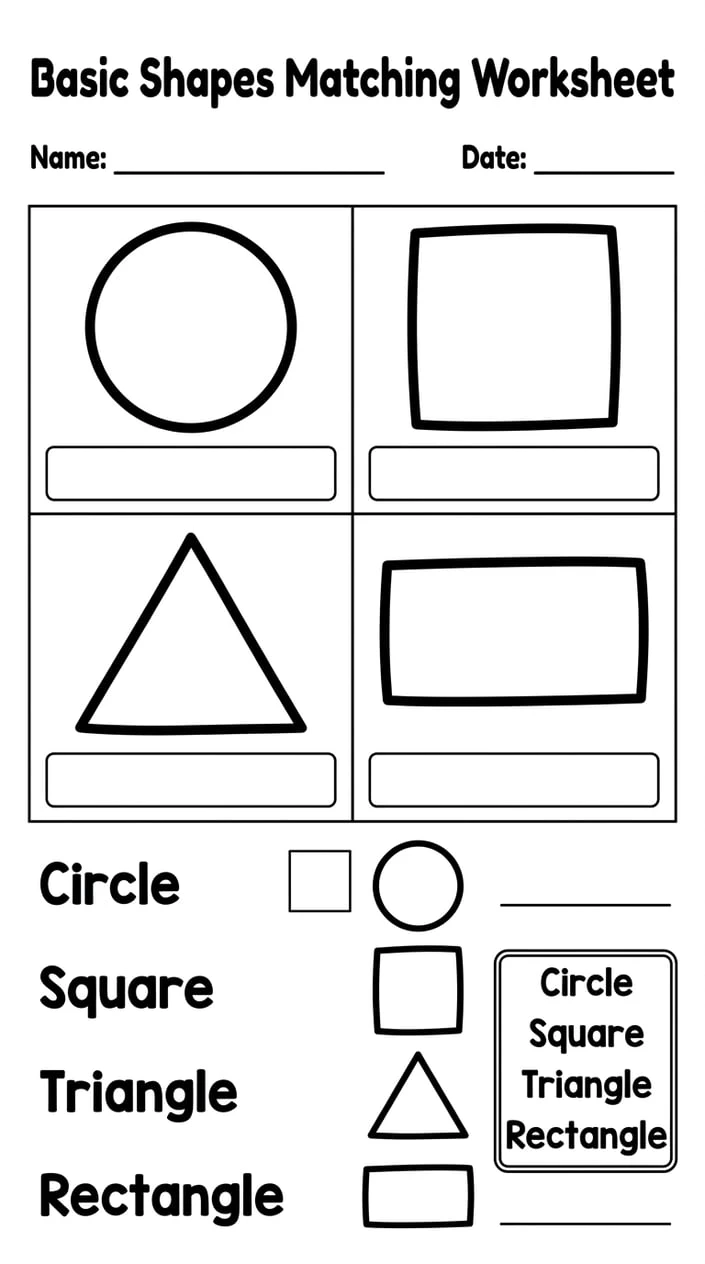
Circle, Square, Triangle and Rectangle Shape Identification
Covers the four core shapes children must recognize first. Children practice identifying and naming each shape by sight. Use real-world examples like a clock for circle to deepen understanding.
Shape Tracing Lines for Preschool Pencil Control
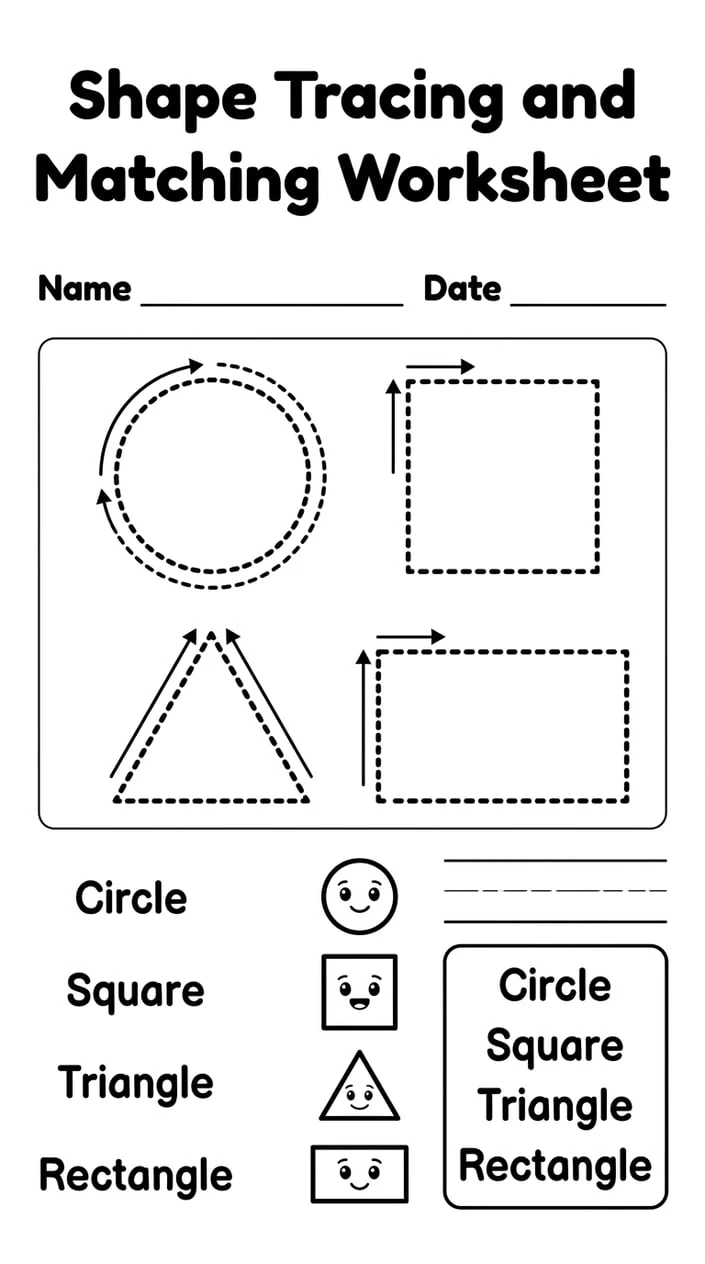
Focuses on tracing the outline of each basic shape to build pencil grip and fine motor skills. Children follow dotted lines around each shape. Encourage slow, careful tracing before moving to freehand drawing.
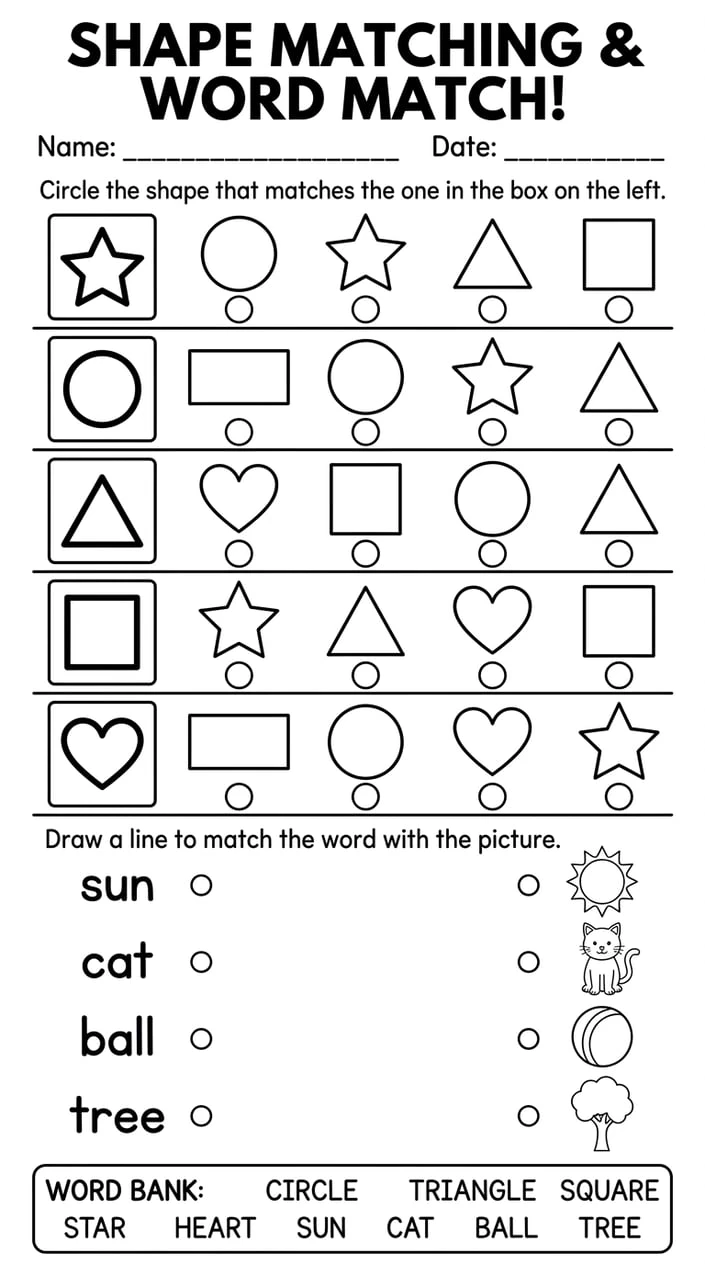
Matching Shapes to Their Names Word Activity
Teaches shape vocabulary alongside visual recognition. Children draw lines from each shape image to its correct word label. Pair this with our letter recognition worksheets to reinforce reading readiness alongside shape names.
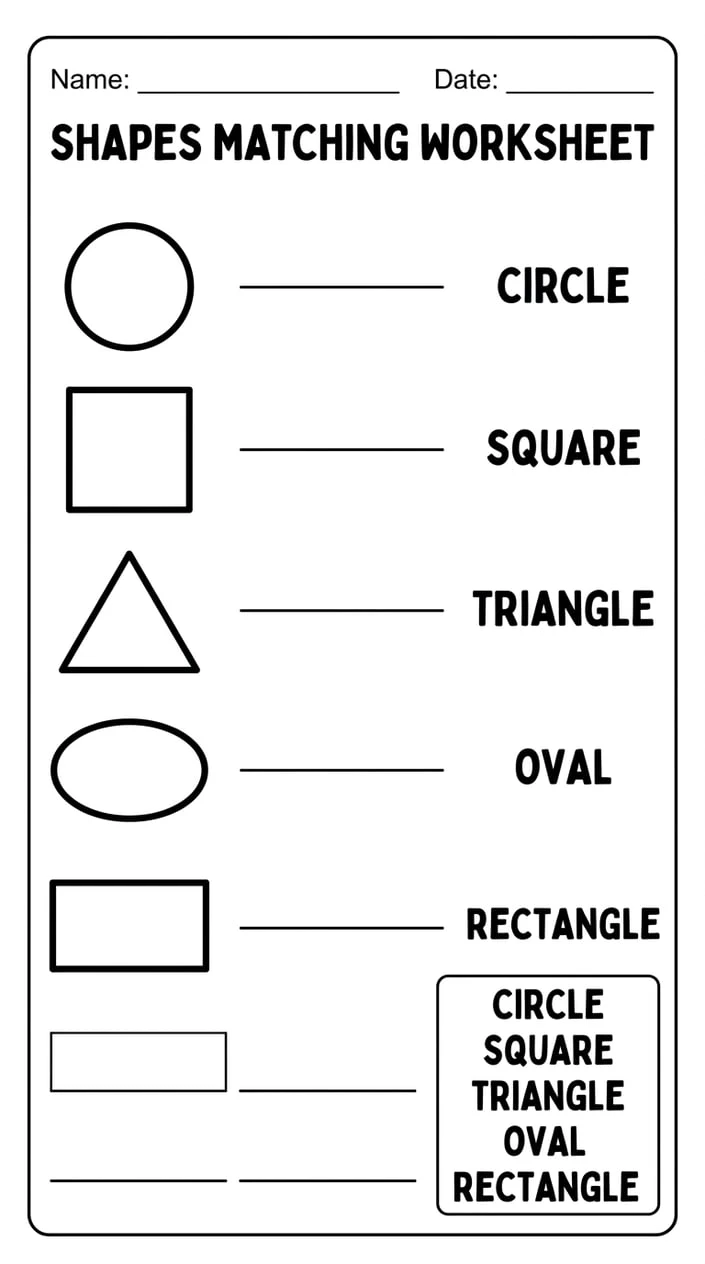
Count the Sides and Corners of Each Shape
Introduces geometry vocabulary: sides and corners. Children count and write how many sides each shape has inside a small answer box. Combine with counting tracing worksheets so children practise writing numbers while recording their answers.
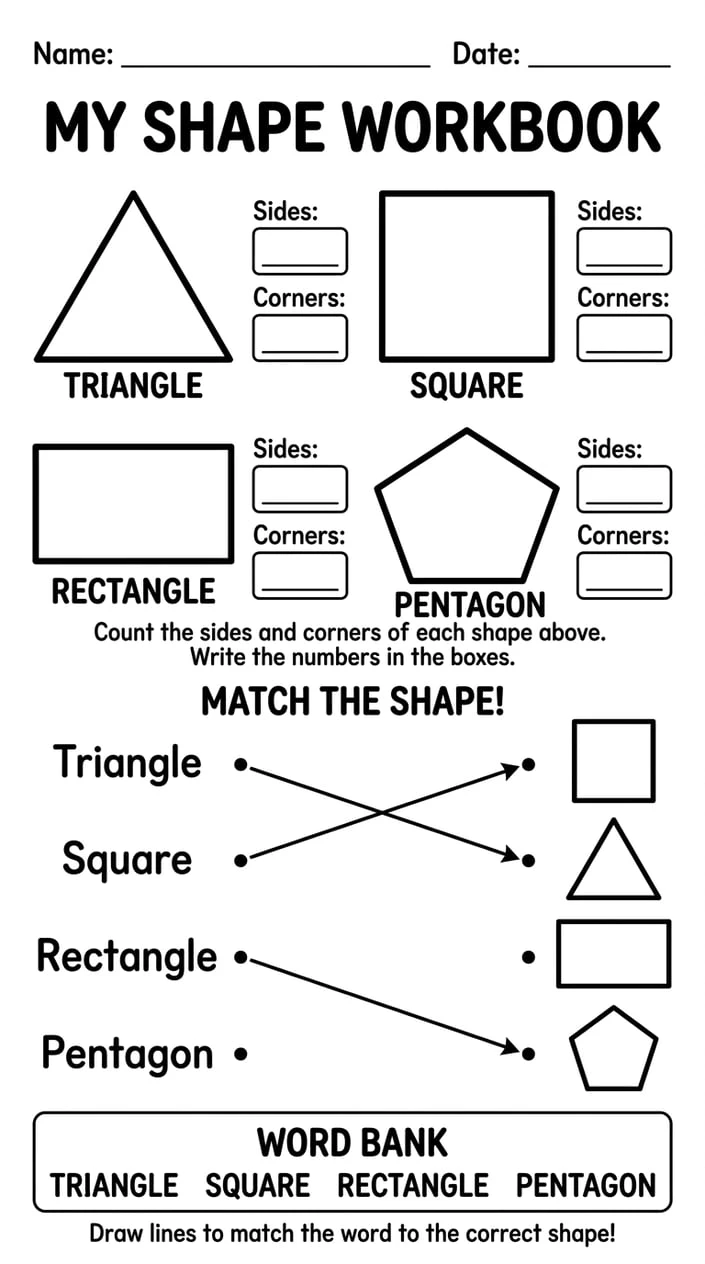
Spot and Circle the Matching Shapes in a Row
Builds visual discrimination — the ability to tell one shape from another. Children look at a target shape on the left, then circle all matching shapes in a row of mixed options. Use this as a timed warm-up activity to build confidence and speed.
📥 Enjoying these worksheets?
Download ALL worksheets in one FREE PDF bundle!
⬇️ Download Full PDF Bundle✅ Free to print | 🖨️ Print-ready PDF | 📄 All worksheets included
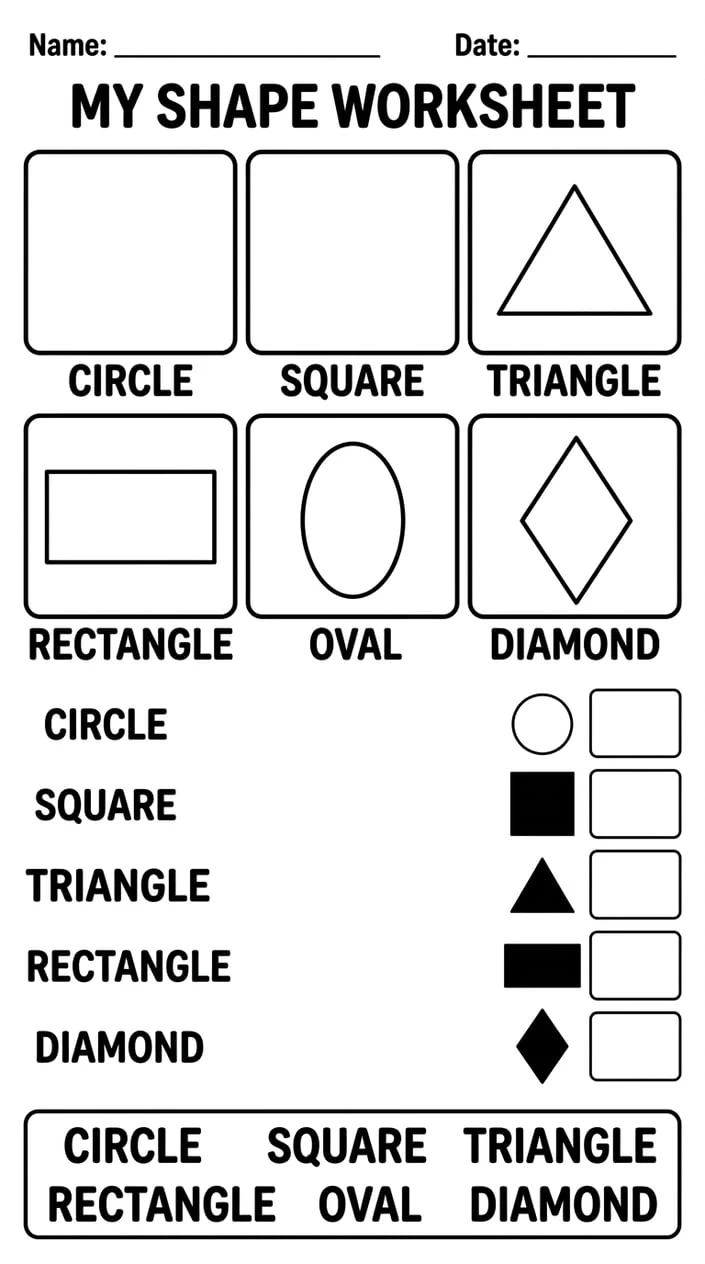
Draw and Write the Shape Name Independently
Moves children from recognition to independent production — drawing and labeling shapes on their own. Each box has a shape name printed below and blank space above for drawing. This pairs naturally with number tracing worksheets to practice both drawing and writing in one session.
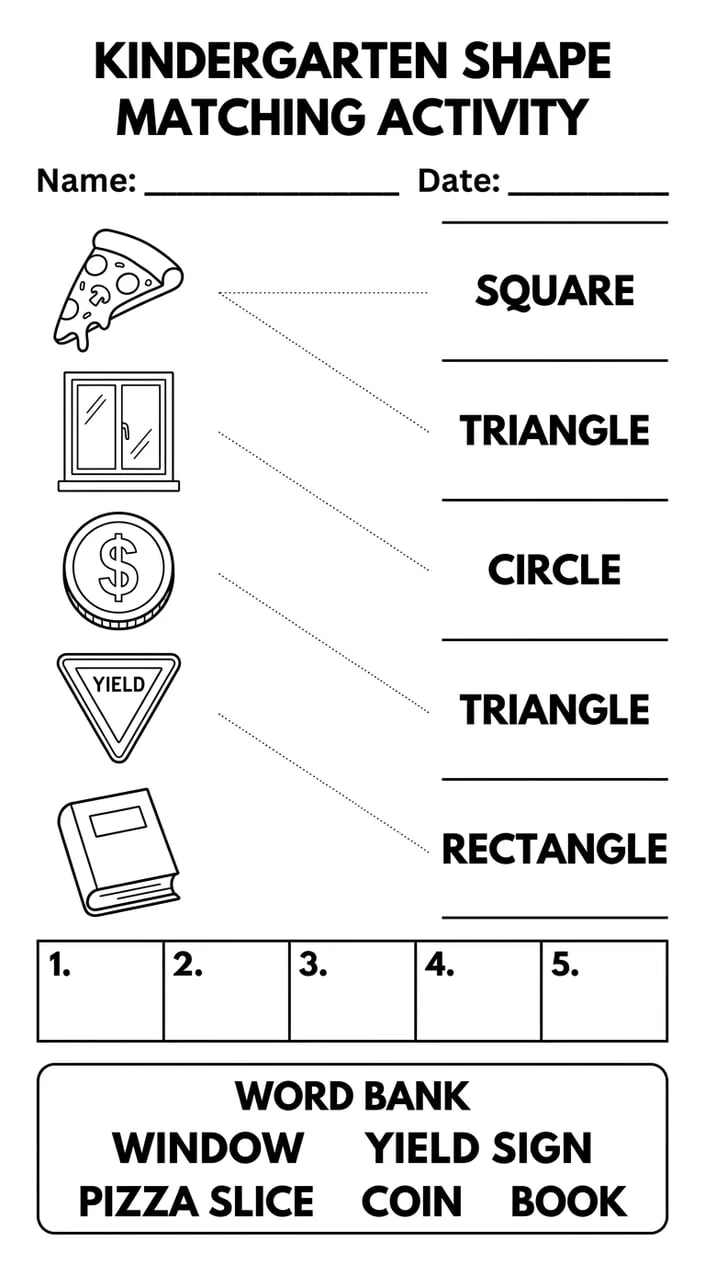
2D Shapes Found in Everyday Objects Matching
Connects abstract shapes to real-world items children already know — a pizza slice for triangle, a door for rectangle, a coin for circle. Children match the object picture to its shape name. This real-world connection helps vocabulary stick far more effectively.
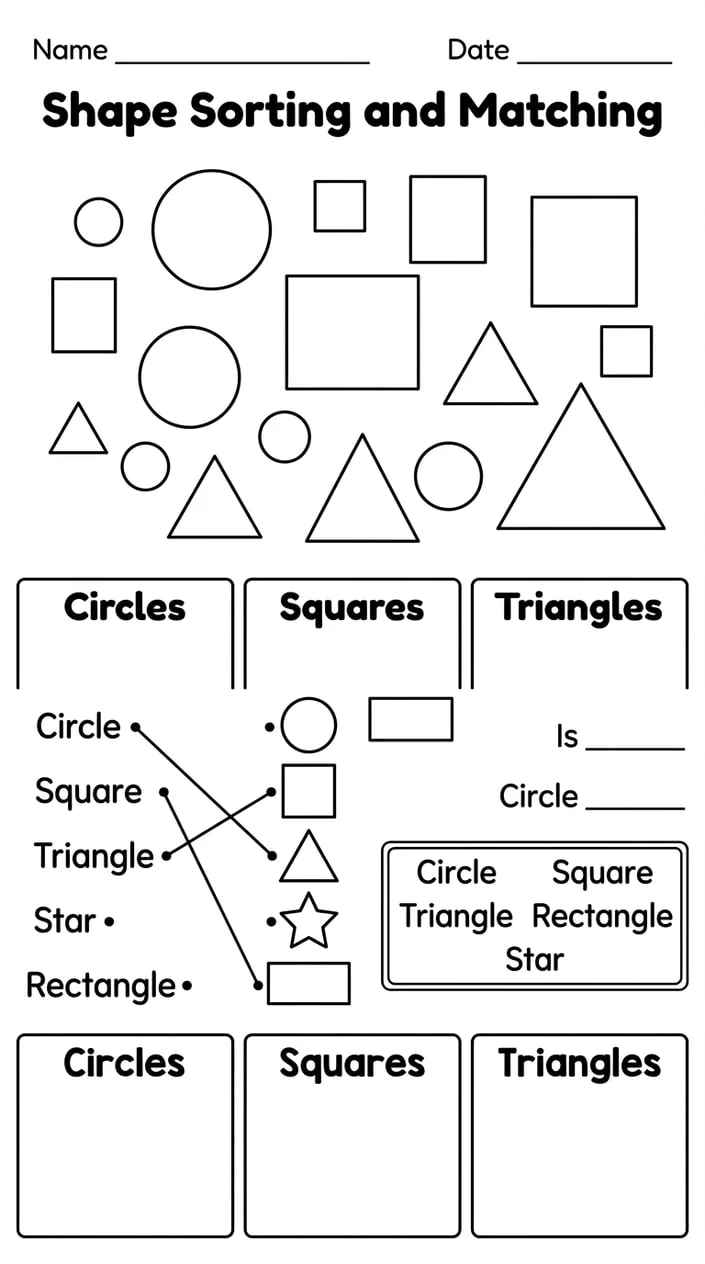
Sorting Shapes by Color Group Into Correct Boxes
Challenges children to sort mixed shapes into labeled category boxes — a key early math skill. Children cut or draw each shape into the correct column. Use this as a group sorting game before introducing the individual shapes worksheet for best results.
Free shapes worksheets for preschoolers make it easy to introduce foundational geometry concepts in a way that is hands-on, age-appropriate, and genuinely fun for young children. From tracing and matching to sorting and labeling, each activity sheet builds the visual and cognitive skills that support early math success. Print your favorite pages, pop them in a learning binder, and watch your little learner grow more confident with every shape they name.
Frequently Asked Questions
What shapes should preschoolers learn first?
Most early childhood educators recommend starting with the four basic shapes — circle, square, triangle, and rectangle. Free shapes worksheets for preschoolers typically introduce these first before moving on to ovals, diamonds, and pentagons. Mastering these four builds a strong visual foundation for more complex geometry later.
At what age can children start learning shapes?
Most children begin recognizing basic shapes between ages 2 and 3, and by age 4 they can name and draw them independently. Shapes worksheets for preschoolers are designed for children aged 3 to 5 to practice identifying, tracing, and labeling shapes in a structured way. Starting early with hands-on activities helps make shape recognition feel natural and enjoyable.
How do shapes worksheets help preschoolers develop math skills?
Shapes worksheets for preschoolers build early geometry vocabulary, visual discrimination, and spatial reasoning — all foundational math skills. Activities like counting sides, sorting shapes, and matching names to pictures introduce logical thinking before formal math instruction begins. These skills directly support later learning in measurement, patterns, and number concepts.
Can I use shapes worksheets for homeschool preschool?
Absolutely — free shapes worksheets for preschoolers are an excellent resource for homeschool families following a structured or play-based curriculum. They require no special materials beyond a pencil and printer, making them easy to incorporate into any daily learning routine. You can use them alongside hands-on shape sorting toys or real-world object hunts for a complete lesson.
How many shapes should a preschooler know by kindergarten?
By the start of kindergarten, most children are expected to recognize and name at least six to eight shapes, including circle, square, triangle, rectangle, oval, diamond, star, and heart. Free shapes worksheets for preschoolers are a great way to ensure children have practiced all of these before their first day of school. Regular short practice sessions of 5 to 10 minutes are more effective than long single sessions.