Diagonal Criss Cross Crochet Afghan — Classic Pieced Pattern for Beginners
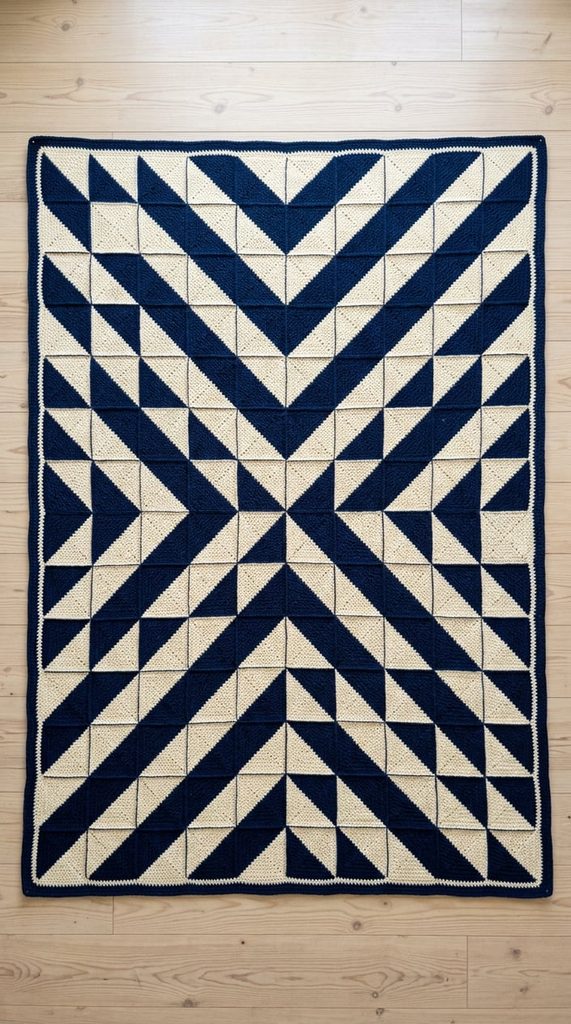
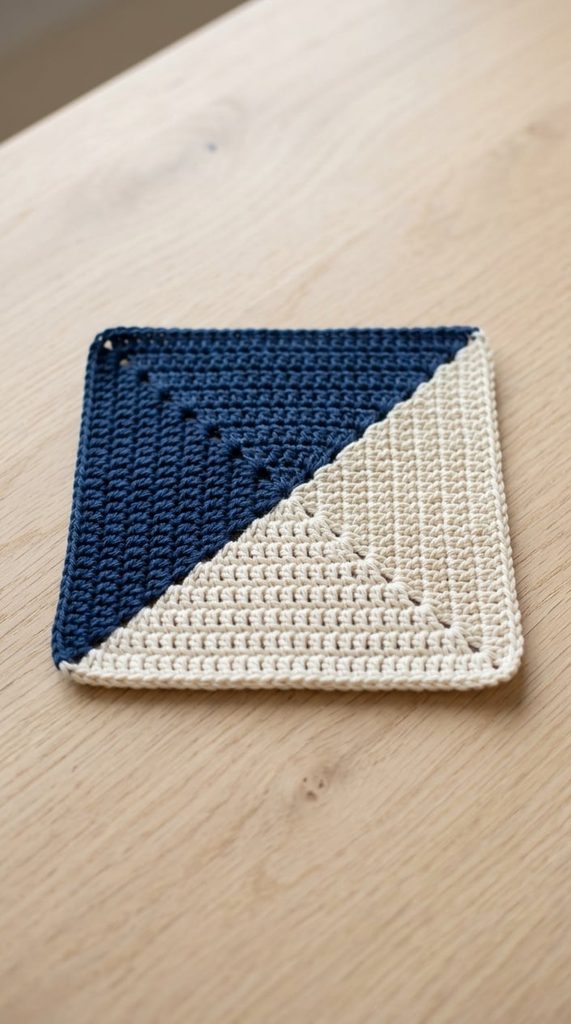
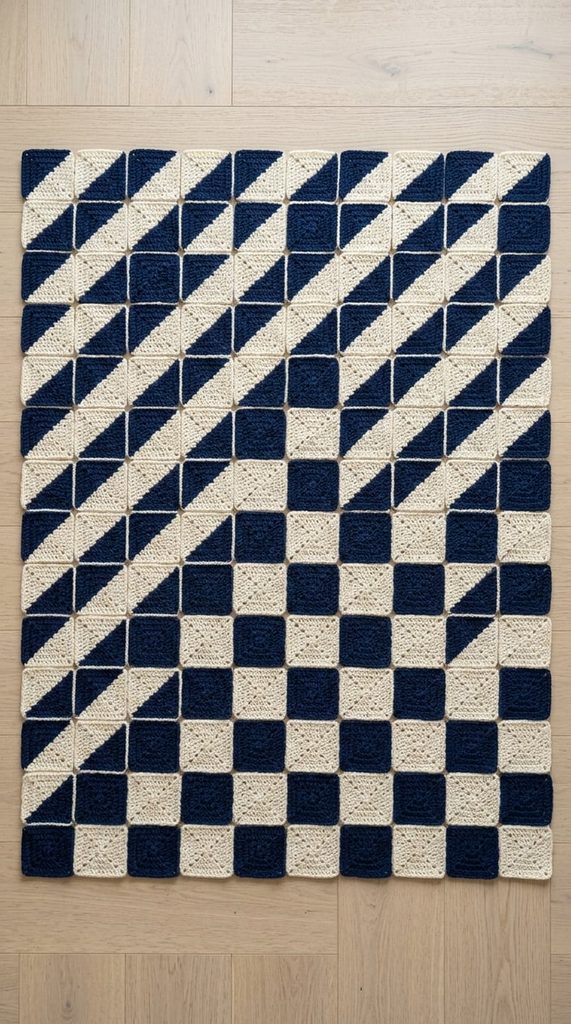
Unlike a basketweave “criss cross” texture, this version creates genuine diagonal crossing stripes across the entire blanket using two-tone bias squares — motifs worked corner-to-corner in one color, then finished in a second color, so when tiled together the color break lines up edge-to-edge and forms continuous diagonal “X” stripes.
Looking for the woven-texture “criss cross” afghan instead? That’s a different pattern made with front-post and back-post double crochet — check out our Basketweave Criss Cross Afghan pattern. This page covers the classic pieced, diagonal-stripe version.
Why This Pattern Works
Each motif is a simple square worked diagonally from one corner to the opposite corner, switching color exactly halfway. Because every square is split along the same diagonal, laying them out in a grid causes the color-change lines to connect from square to square — creating the long, unbroken diagonal stripes this pattern is known for, without any complex charting or color-tracking.
Pattern Details At a Glance
| Detail | Information |
|---|---|
| Skill Level | Easy / Beginner |
| Motif Size | Approx. 6″ x 6″ (15 x 15 cm) |
| Finished Size (5×6 grid) | Approx. 30″ x 36″ (76 x 91 cm) |
| Hook Size | 5.00 mm (US H) |
| Yarn Weight | Worsted Weight (#4) |
| Construction | Pieced bias squares, whip-stitched together |
Materials You Will Need
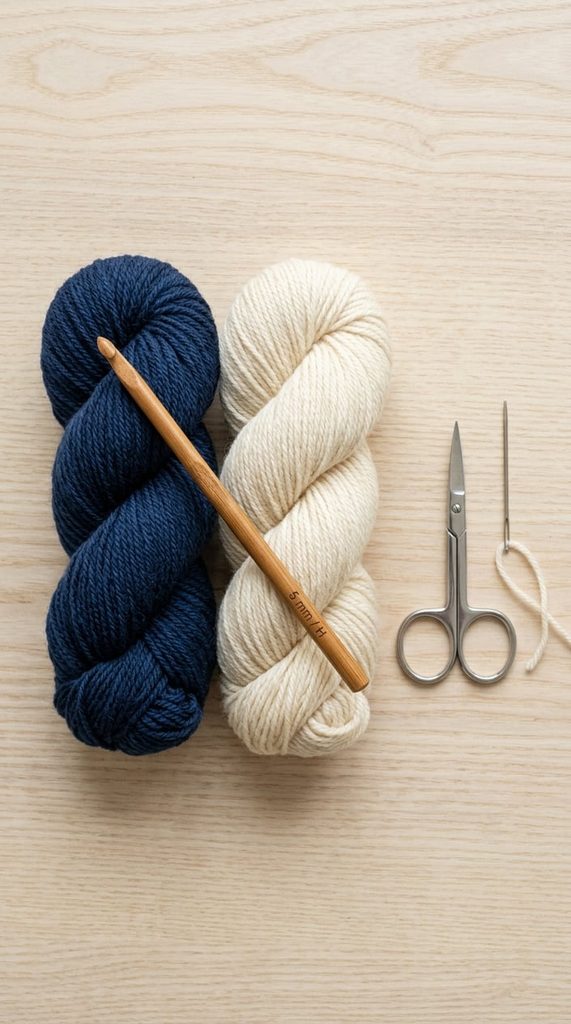
- Worsted weight (#4) yarn in 2 contrasting colors — a light color and a dark color
- 5.00 mm (US H) crochet hook
- Yarn needle
- Scissors
- Stitch marker (optional)
Yarn tip: High-contrast color pairs (navy + cream, rust + oatmeal, forest + white) show off the diagonal stripe effect most dramatically. Low-contrast pairs still work, but the crossing lines read more subtly.
Abbreviations
| Abbreviation | Meaning |
|---|---|
| ch(s) | chain(s) |
| dc | double crochet |
| sc | single crochet |
| sl st | slip stitch |
| st(s) | stitch(es) |
| rep | repeat |
Step 1: Make the Bias Squares
Each square starts as a single stitch and grows diagonally to the center, then shrinks diagonally back down — like a corner-to-corner square split into two color triangles. Make one motif for every position in your planned grid.
With Color A (light)
Row 1: Ch 4, dc in the 4th ch from hook. (2 sts)
Row 2: Ch 4, turn. Dc in the 4th ch from hook, dc in next st, dc in top of turning chain from previous row. (4 sts)
Row 3: Ch 4, turn. Dc in the 4th ch from hook, dc in each st across, dc in top of turning chain. (6 sts)
Continue repeating Row 3’s instructions, adding 2 stitches each row, until your triangle half measures approximately half the width of your target square (about 8 rows for a 6 in square). This is your halfway point — the longest row of Color A.
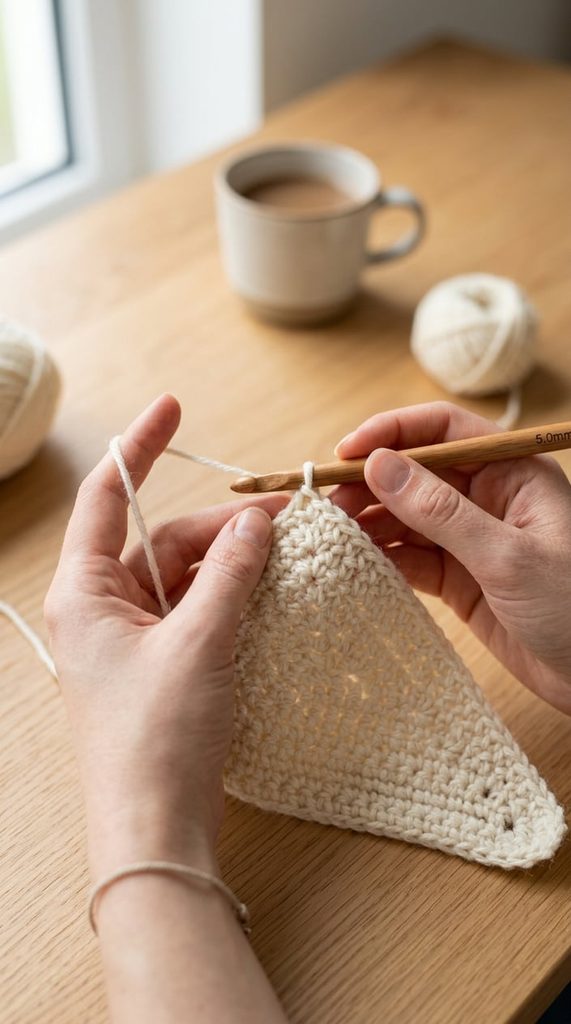
Note: Each row you add builds the triangle wider. Stop increasing once you reach your target half-width, then move to Step 2 to begin shrinking back down in your second color.
Step 2: Complete the Square in Color B (dark)
Fasten off Color A. Join Color B at the end of your last row.
Row 1 (decrease row): Ch 2, turn. Skip the first st, dc in each remaining st across, leaving the last 2 sts unworked. (2 fewer sts)
Continue repeating this decrease row, losing 2 stitches each row, until only 2 stitches remain. Fasten off and weave in ends.
Important: Keep your decrease consistent — skip exactly 1 stitch at the start and leave exactly 2 unworked at the end of every row. An uneven decrease is the most common cause of a lopsided square.
Repeat Steps 1 and 2 until you have one completed square for every position in your planned grid (30 squares for a 5×6 lap-blanket layout).
Step 3: Arrange Your Squares
Tip: Before joining anything, lay all your squares out on the floor first. Every square should be rotated so its Color A triangle and Color B triangle both point the same diagonal direction — this is what makes the stripes connect from square to square instead of forming a checkerboard.
Arrange your squares in rows, alternating which corner is “up” between adjacent squares as needed so the diagonal color lines run continuously across the whole layout. Take a photo of your final layout before you start joining, so you can reference it as you work.
Step 4: Join the Squares
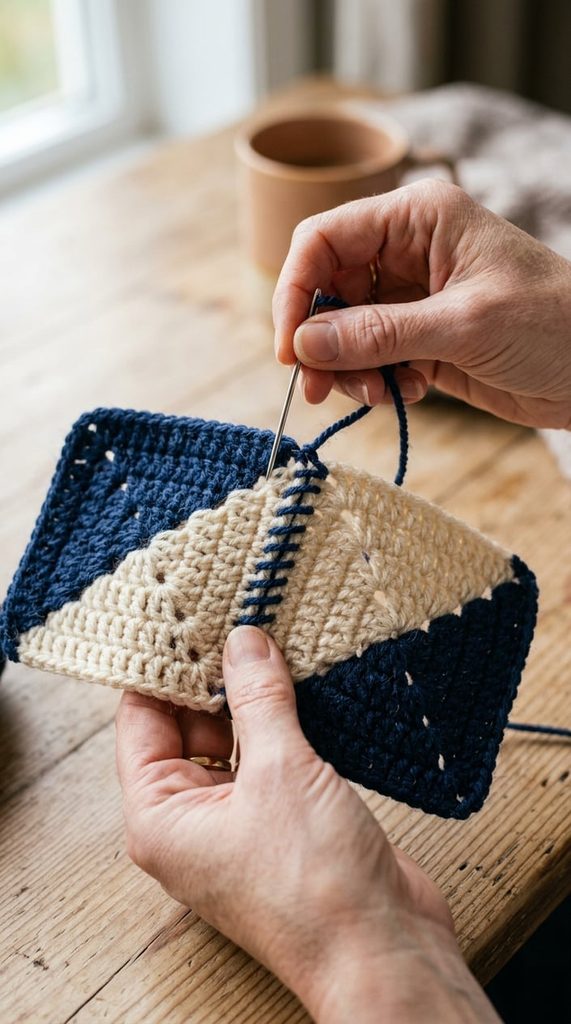
Using a yarn needle and a length of Color B, whip stitch squares together edge to edge, working one row at a time.
- Place two squares right sides together (or side by side, depending on your preferred join).
- Whip stitch along the shared edge, keeping stitches small and even.
- Join all squares in each horizontal row first.
- Then join the completed rows together vertically.
- Weave in all ends as you go.
Step 5: Add the Border
Round 1: Attach yarn at any corner. Sc evenly around the entire blanket, working 3 sc into each corner stitch to keep the corners flat. Join with a sl st.
Rounds 2–3: Repeat Round 1’s instructions for 2 more rounds, or until your border reaches your desired width.
Fasten off and weave in your final ends.
Frequently Asked Questions
How is this different from a basketweave “criss cross” pattern?
A basketweave criss cross afghan is worked in one continuous piece using front-post and back-post stitches to create a woven texture. This pattern is pieced from individual two-tone squares that create genuine diagonal crossing stripes across the entire blanket — a completely different construction and a completely different finished look.
Can I make this a different size?
Yes. Add or remove squares from your grid layout to adjust both width and length. Each square adds roughly 6 in to whichever direction you extend the grid.
Why don’t my diagonal stripes line up between squares?
This almost always comes from squares being rotated inconsistently during layout. Double-check that every square’s color triangles point the same diagonal direction before you begin joining — it’s much easier to fix a rotation mistake before whip stitching than after.
What yarn works best for this pattern?
Worsted weight yarn in two high-contrast colors shows the diagonal stripe effect most clearly. Cotton or acrylic both work well — just make sure both colors are the same yarn weight so your squares come out a consistent size.
Final Thoughts
This diagonal criss cross afghan is a wonderful project for using up contrasting yarn from your stash, and the bold striped effect makes a striking statement piece for any room. Take your time with the layout step — getting the diagonal direction right before joining makes all the difference in the finished look.
If you make this diagonal criss cross afghan, we would love to see your finished project! Share it in the comments below.